
Use AI to Build a Better Spreadsheet, Then Turn it into a Web App
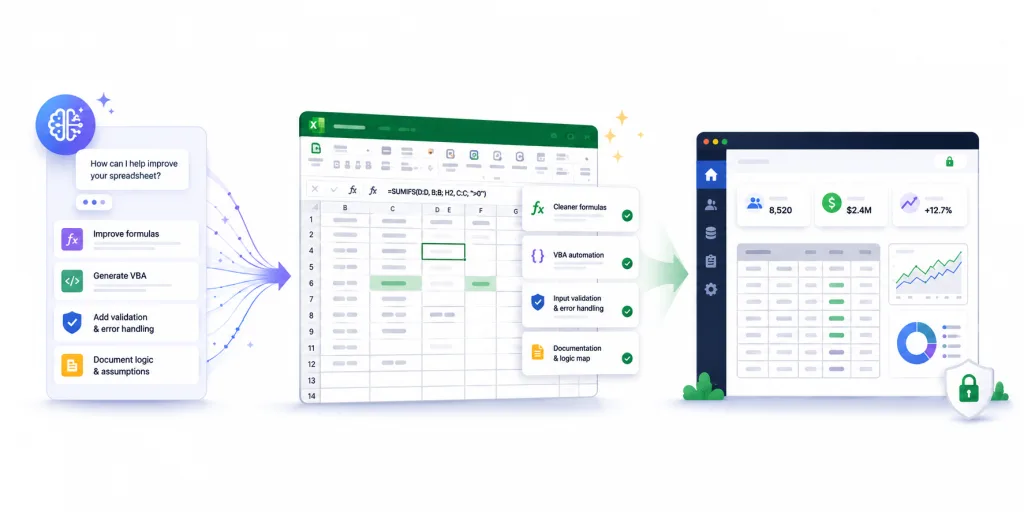
Most of the AI conversation around Excel predicts its replacement. Meanwhile, the people who actually build spreadsheets are using AI to make them better than ever. AI assistants now write and explain formulas, generate VBA, suggest error handling, and document logic that has gone unexplained for years. Microsoft ships Copilot inside Excel itself, complete with […]
Three Paths from Spreadsheet to Web Application

Your company probably has at least one. A spreadsheet that started as a quick tool and then became the engine behind quoting, pricing, rating, or planning for your entire team. It holds years of refined business logic, and the people who depend on it trust the numbers it produces. It also breaks in ways that […]
How Microsoft’s Excel Macro Security Changes Are Affecting Operations Teams in 2026
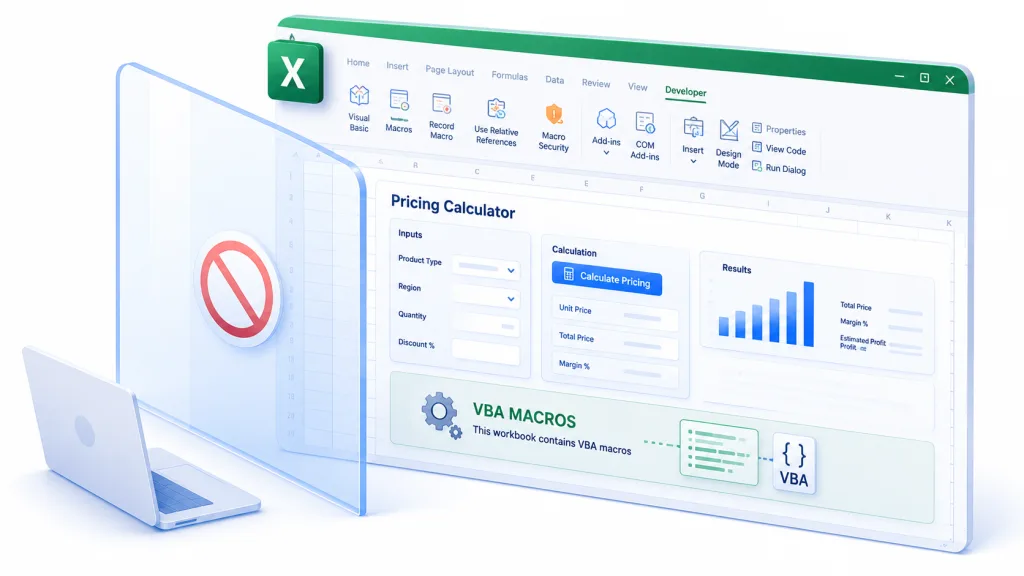
A Security Fix That Came at a Cost In February 2022, Microsoft announced it would block VBA macros by default in Office files downloaded from the internet. After a brief rollback in response to user feedback, the change resumed rollout across Microsoft 365 for Windows later that year, covering Access, Excel, PowerPoint, Visio, and Word. […]
How to Turn Insurance Rating Data into Analytics with EASA’s Built-In Database

If your rating tools live in Excel, you already know the drill. Files get emailed around, saved with names like rater_v3_FINAL_use-this-one.xlsx, and the results exist only as isolated snapshots on someone’s desktop, with no central record and no way to look back for analytics. EASA changes that by surrounding your existing rating spreadsheets with the […]
LLM Application Pre-fill for MGAs: Faster Insurance Submissions with AI

Every day, underwriting teams receive applications across a patchwork of formats: PDFs from brokers, spreadsheets from agents, emails with attachments, scanned ACORD forms. Someone on your team opens each one, reads through it, and manually keys the data into your quoting or policy administration system. It’s repetitive, error-prone, and expensive and it’s consuming hours that […]
How to Get Better AI Outputs from Your Excel-Based Web Apps

When you deploy an Excel spreadsheet as a web app with EASA, you get something most AI integrations struggle to find on their own: clean, structured, consistently labeled data. Every time a user fills out a form or runs a calculation in your EASA app, the output lands in organized fields like product names, pricing […]
How to Securely Deploy Excel Rating and Underwriting Tools to Agents

If your team relies on Excel-based tools, you are in good company. Across the insurance industry, Excel continues to power rating models, underwriting workflows, pricing tools, and internal processes because it is flexible, familiar, and already deeply embedded in how teams work. Getting these tools into the hands of agents and teams while maintaining control […]
Insurance Teams Are Wasting Time and Money on Replacing Excel

If you work in insurance, Excel is likely a core part of how your team operates. From rating models and pricing tools to underwriting workbooks and actuarial analysis, it supports many of the processes you rely on every day. You might be considering an Insurtech platform to bring more structure to those processes. At the […]
Introducing SheetConnect: Where People and Spreadsheets Connect
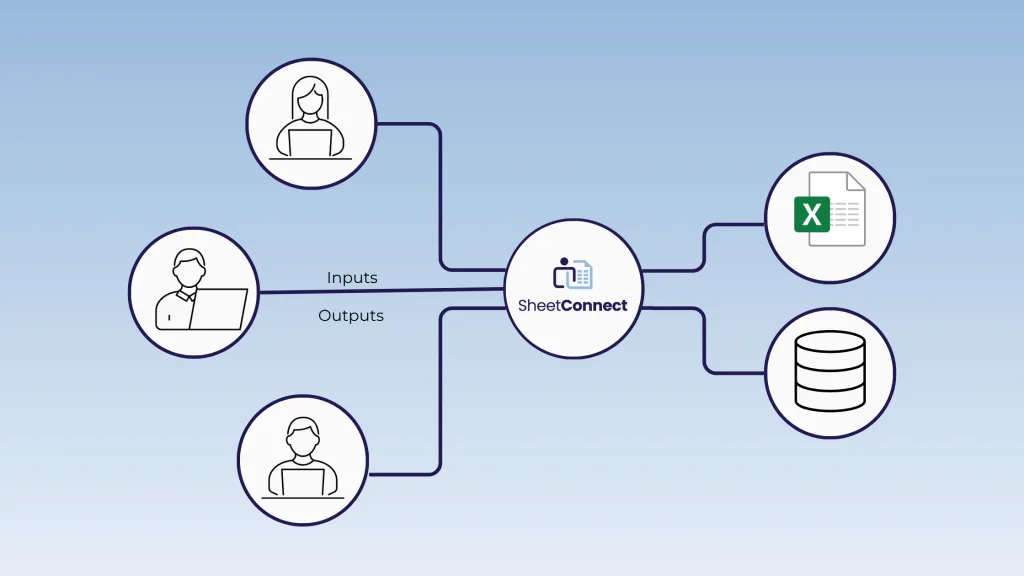
Secure, Scalable Spreadsheet Sharing Without Rebuilding Today we are introducing SheetConnect, a new way to share, control, and scale your Excel spreadsheets without rewriting a single formula or line of VBA. For many organizations, spreadsheets contain critical logic that is difficult and expensive to rebuild in custom software. SheetConnect brings these tools into a secure, […]
How Secure Are Your Spreadsheets? Take the Risk & Readiness Assessment

Why Spreadsheets are Here to Stay Spreadsheets sit behind nearly every critical business decision. In fact, a recent study found that 90% of firms still rely on spreadsheets in their financial operations despite bottlenecks. Spreadsheets have been around for decades because they are familiar and flexible, keeping them relevant even as new technologies emerge. Employees […]